[ad_1]
Query: what do the next statistics have in commonplace?
Resolution: the automobiles on our streets, essentially the not-so-humble passenger automobile.
Regardless of the (sluggish) migration to electric-powered automobiles, shopper traits are making using much more wasteful and unequal. A fresh research discovered the emissions stored from electrical automobiles were greater than canceled out via the rise in gas-guzzling Game Application Cars (SUVs). All over the world, SUVs on my own emit extra carbon air pollution than Canada or Germany, and are inflicting a larger building up in weather air pollution than heavy business.

Enroll and get your unfastened EV information
The inexperienced persons’ information to getting an EV
Whilst automobiles are occasionally essential for folks’s mobility and social inclusion wishes — no longer least the ones with disabilities — car-centric towns in particular drawback the already marginalized. In the United Kingdom, girls, younger and older folks, the ones from minority communities and disabled persons are concentrated within the lowest-income families, of which 40% would not have a automobile. By contrast, just about 90% of the highest-income families personal no less than one automobile.
So the using conduct of a minority impose excessive prices on society, and that is very true incities. Copenhagen, for instance, has calculated that while each and every kilometer cycled advantages society to the track of €0.64 (53 pence), each and every kilometer pushed incurs a internet lack of -€0.71 (-59p), when affects on person wellbeing (bodily and psychological well being, injuries, visitors) and the surroundings (weather, air, and noise air pollution) are accounted for.
So each and every kilometer traveled the place a automobile is changed via a bicycle generates €1.35 (£1.12) of social advantages — of which only some cents can be stored via switching from a fossil-fuelled to an electric-powered automobile, in keeping with this research.
Lowering automobile use in towns
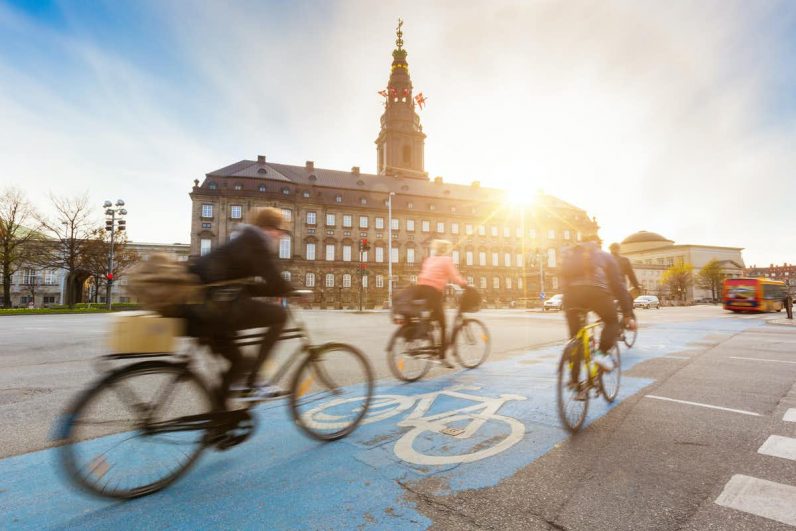
Part a century in the past, the Danish capital used to be ruled via automobiles. However following grassroots campaigns to modify insurance policies and streets, together with changing automobile parking with secure, separated motorcycle lanes, Copenhagen has greater its cycling proportion of all journeys from 10% in 1970 to 35% as of late. In 2016, for the primary time, extra bicycles than automobiles made trips across the town over the process that 12 months.
However whilst many different car-limiting tasks were tried around the globe, town officers, planners, and voters nonetheless would not have a transparent, evidence-based option to cut back automobile use in towns. Our newest analysis, performed with Paula Kuss on the Lund College Centre for Sustainability Research and printed in Case Research on Delivery Coverage, seeks to deal with this via quantifying the effectiveness of various tasks to scale back city automobile use.
Our find out about ranks the 12 best measures that Eu towns have offered in fresh many years, in accordance with real-world knowledge on inventions starting from the “carrot” of motorcycle and walk-to-work schemes to the “stick” of taking out unfastened parking. The rating displays towns’ successes no longer solely relating to measurable discounts in automobile use, however in attaining stepped forward high quality of lifestyles and sustainable mobility for his or her citizens.
In all, we’ve screened just about 800 peer-reviewed studies and case research from right through Europe, printed since 2010, searching for those who quantified the place and the way towns had effectively decreased automobile use.
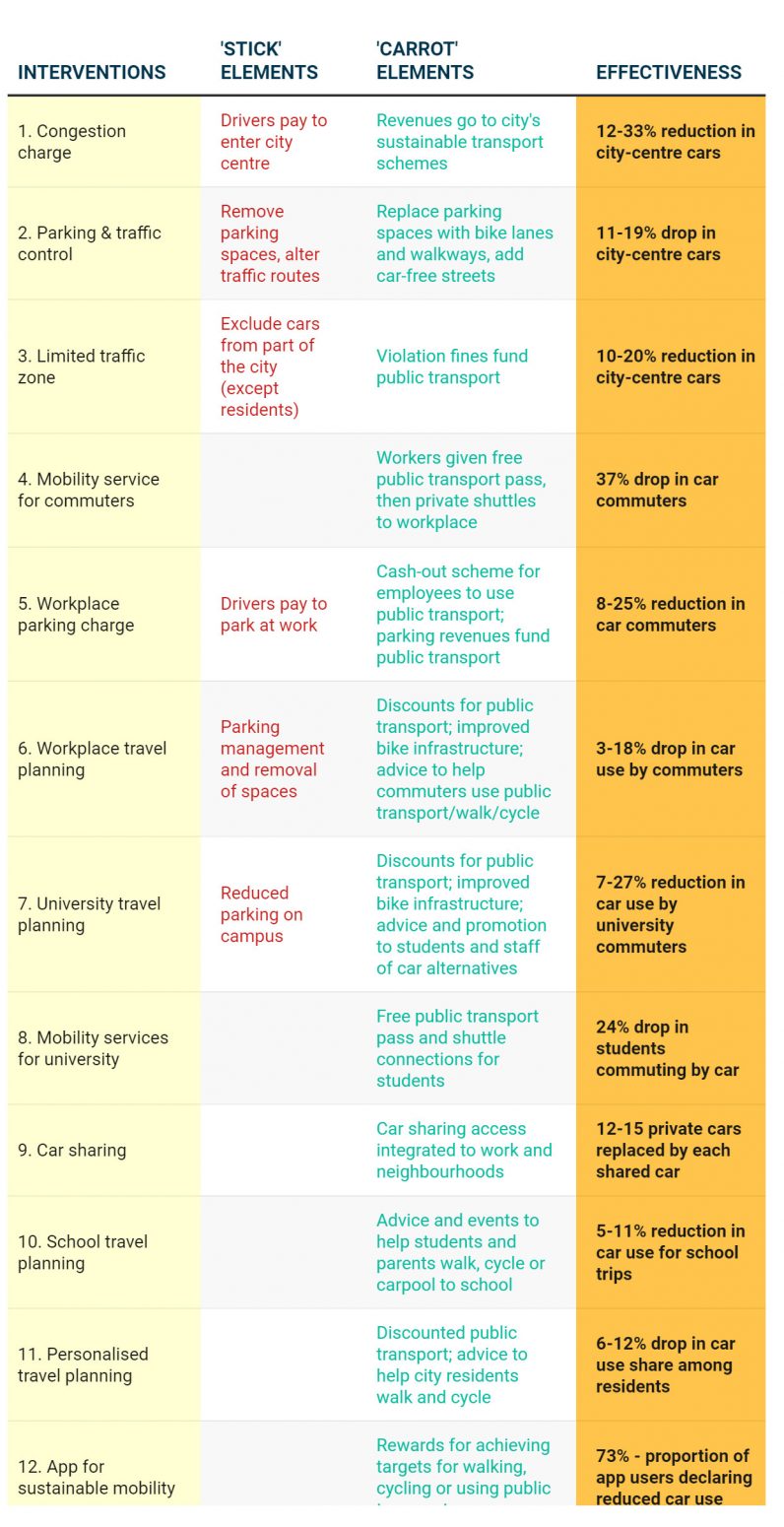
One of the best measures, in keeping with our assessment, are introducing a congestion price, which reduces city automobile ranges via any place from 12% to 33%, and growing car-free streets and separated motorcycle lanes, which has been discovered to decrease automobile use in town facilities via as much as 20%. Our complete rating of the highest 12 car-reducing measures is summarised on this desk:
The inequality of vehicle use
Automobiles are inherently inefficient and inequitable of their use of land and assets. On moderate, they spend 96% in their time parked, taking on precious city area which may be put to extra recommended makes use of comparable to housing and public parks. In Berlin, automobile customers on moderate absorb 3.5 instances extra public area than non-car customers, essentially via on-street parking.
And it’s overwhelmingly richer folks who power probably the most: in Europe, the highest 1% via revenue power just about 4 instances greater than the median driving force, accounting for some 21% in their private weather footprint. For those perfect emitters, weather air pollution from using is 2nd solely to flying (which, on moderate, generates two times as many emissions).
Prioritizing automobiles as a method of delivery additionally favors suburban sprawl. Town suburbs normally possess greater properties that generate upper ranges of intake and effort use. North American suburban families constantly have upper carbon footprints than city ones: one find out about in Toronto discovered suburban footprints had been two times as excessive.
It’s additionally transparent that street visitors ranges swell to fill the dimensions of the roads constructed – but visitors making plans mechanically ignores the truth that this “caused call for” exaggerates the advantages and underestimates the prices of establishing extra roads.
Electrical automobiles are essential, however they’re no longer a panacea. Since automobiles have a tendency to be at the street for a very long time, the migration to electrical automobiles could be very sluggish. Some research wait for somewhat small emissions discounts over the approaching decade on account of electrical automobile uptake. And even supposing there’s not anything harmful launched from an electrical automobile’s exhaust pipe, the put on of vehicle brakes and tires nonetheless creates poisonous mud and microplastic air pollution.
Alternatively a automobile is powered, can it ever be an effective use of assets and area to spend as much as 95% of that power transferring the load of the automobile itself, reasonably than its passengers and items?
COVID-19: a overlooked alternative?
Our find out about assesses city mobility inventions and experiments offered prior to the pandemic used to be declared. Based on COVID-19, shuttle conduct (initially, no less than) modified dramatically. However following huge discounts in using all the way through the spring of 2020, street use and the related ranges of weather air pollution have since rebounded to close pre-pandemic ranges. Certainly, in Sweden, whilst public delivery use declined via round 42% all the way through the primary 12 months of the pandemic, automobile shuttle declined via solely 7% in the similar length, resulting in an total building up within the share of vehicle use.
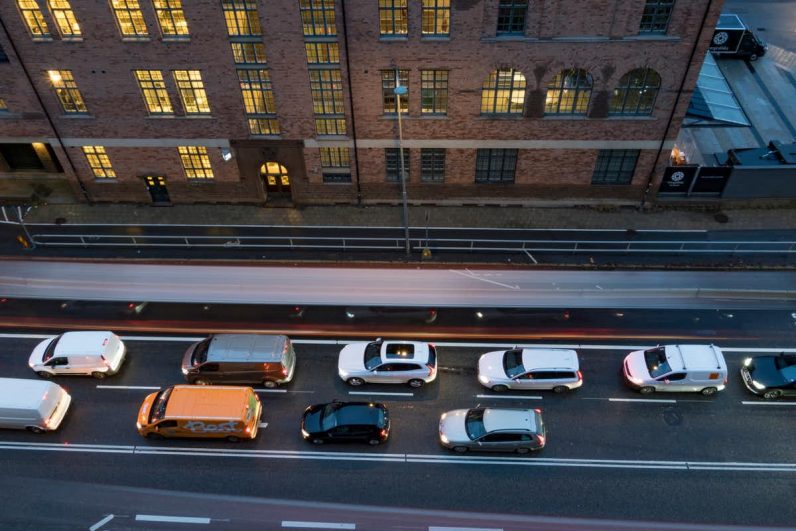
Whilst entrenched conduct comparable to automobile commuting are laborious to shift, instances of disruption can be offering an efficient second to trade mobility conduct – partly as a result of folks pressured to check out a brand new addiction might uncover it has sudden benefits. For such conduct to stay, alternatively, additionally calls for adjustments within the bodily infrastructure of towns.
Sadly, whilst Eu towns that added pop-up motorcycle lanes all the way through the pandemic greater biking charges via a surprising 11-48%, we at the moment are seeing a go back to car-centric towns, with additional automobile lanes and parking areas as soon as once more displacing cycle lanes and area for pedestrians.
General, the alternatives to align pandemic restoration measures with weather objectives have in large part been squandered. Not up to 20% of presidency spending on pandemic measures globally had been more likely to additionally cut back greenhouse fuel emissions.
The level to which staff resume using to their workplaces is any other key factor figuring out long run automobile use in towns. Considerate shuttle insurance policies to scale back needless shuttle, and alternatives for far flung members to totally take part in conferences and meetings digitally, may slash emissions via as much as 94% – and save time in addition. Those that paintings remotely 3 or extra days every week shuttle much less total than their friends. However lengthy automobile commutes can temporarily wipe out such emissions financial savings, so residing on the subject of paintings remains to be the most suitable option.
No silver bullet answer
The analysis is obvious: to reinforce well being results, meet weather objectives and create extra habitable towns, decreasing automobile use must be an pressing precedence. But many governments in america and Europe proceed to closely subsidize using via a mix of incentives comparable to subsidies for fossil gas manufacturing, tax allowances for commuting via automobile, and incentives for corporation automobiles that advertise using over different way of delivery. Necessarily, such measures pay polluters whilst enforcing the social prices on wider society.
Town leaders have a much wider vary of coverage tools at their disposal than some may notice – from financial tools comparable to fees and subsidies to behavioral ones like offering comments evaluating folks’ shuttle selections with their friends’. Our find out about discovered that greater than 75% of the city inventions that experience effectively decreased automobile use had been led via a neighborhood town executive – and particularly, those who have proved best, comparable to congestion fees, parking, and visitors controls, and restricted visitors zones.
However the most important perception from our find out about is that slim insurance policies don’t appear to be as efficient – there’s no “silver bullet” answer. Essentially the most a hit towns normally mix a couple of other coverage tools, together with each carrots that inspire extra sustainable shuttle alternatives, and sticks that price for, or limit, using and parking.
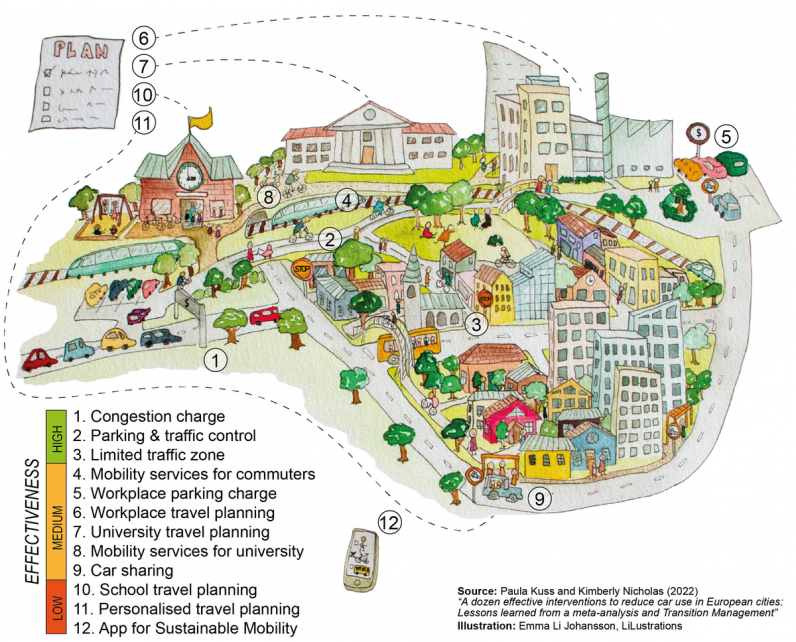
So listed here are the 12 highest tactics to scale back town automobile use:
1. Congestion fees
One of the best measure recognized via our analysis includes drivers paying to go into town heart, with the revenues generated going against selection way of sustainable delivery. London, an early pioneer of this technique, has decreased town heart visitors via a whopping 33% for the reason that price’s creation via town’s first elected mayor, Ken Livingstone, in February 2003. The fixed-charge rate (with exemptions for sure teams and automobiles) has been raised through the years, from an preliminary £5 in line with day as much as £15 since June 2020. Importantly, 80% of the revenues raised are used for public delivery investments.
Different Eu towns have adopted go well with, adopting an identical schemes after referenda in Milan, Stockholm , and Gothenburg – with the Swedish towns various their pricing via day and time. However in spite of congestion fees obviously resulting in an important and sustained aid of vehicle use and visitors quantity, they can’t via themselves completely get rid of the issue of congestion, which persists whilst the incentives and infrastructure favoring automobile use stay.
2. Parking and visitors controls
In a variety of Eu towns, rules to take away parking areas and change visitors routes – in lots of circumstances, changing the gap previously devoted to automobiles with car-free streets, motorcycle lanes , and walkways – has proved extremely a hit. For instance, Oslo’s alternative of parking areas with walkable car-free streets and motorcycle lanes used to be discovered to have decreased automobile utilization within the heart of the Norwegian capital via as much as 19%.
3. Restricted visitors zones
Rome, historically certainly one of Europe’s maximum congested towns, has shifted the stability against larger use of public delivery via proscribing automobile access to its centre at sure instances of day to citizens solely, plus those that pay an annual rate. This coverage has decreased automobile visitors within the Italian capital via 20% all the way through the limited hours, and 10% even all the way through unrestricted hours when all automobiles can talk over with the middle. The violation fines are used to finance Rome’s public delivery gadget.
4. Mobility products and services for commuters
One of the best carrot-only measure recognized via our assessment is a marketing campaign to supply mobility products and services for commuters within the Dutch town of Utrecht. Native executive and personal firms collaborated to supply unfastened public delivery passes to workers, mixed with a non-public trip bus to glue transit stops with places of work. This program, promoted via a advertising and communique plan, used to be discovered to have accomplished a 37% aid within the proportion of commuters touring into town heart via automobile.
5. Administrative center parking fees
Some other efficient way of decreasing the choice of automobile commuters is to introduce place of work parking fees. For instance, a big scientific heart within the Dutch port town of Rotterdam accomplished a 20-25% aid in worker automobile commutes via a scheme that charged workers to park outdoor their workplaces, whilst additionally providing them the risk to “money out” their parking areas and use public delivery as an alternative. This scheme used to be discovered to be round thrice more practical than a extra intensive program in the United Kingdom town of Nottingham, which implemented a place of work parking price to all primary town employers possessing greater than ten parking areas. The income raised went against supporting the Midlands town’s public delivery community, together with enlargement of a tram line.
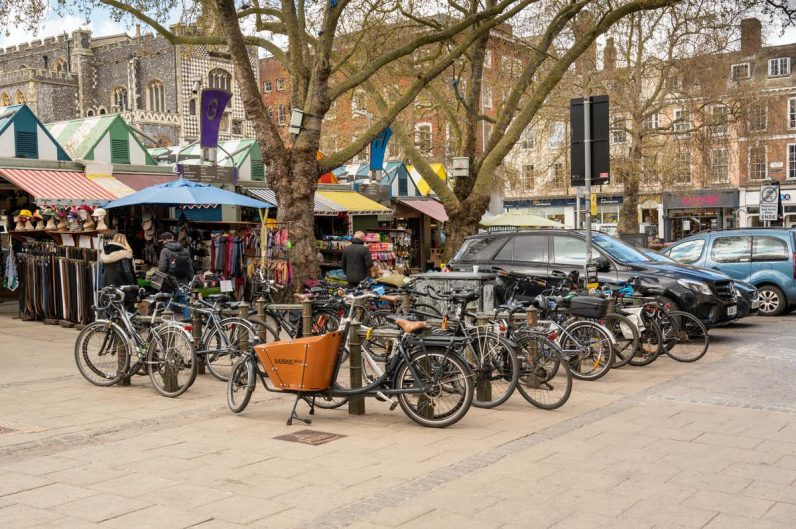
6. Administrative center shuttle making plans
Systems offering company-wide shuttle methods and recommendation to inspire workers to finish their automobile commutes were broadly utilized in towns throughout Europe. A significant find out about, printed in 2010, assessing 20 towns throughout the United Kingdom discovered a median of 18% of commuters switched from automobile to any other mode after a complete vary of measures had been mixed – together with corporation trip buses, reductions for public delivery , and stepped forward motorcycle infrastructure – in addition to decreased parking provision.
In a distinct program, Norwich accomplished near-identical charges via adopting a complete plan however with out the reductions for public delivery. Those carrot-and-stick efforts seem to have been more practical than Brighton & Hove’s carrot-only means of offering plans and infrastructure comparable to place of work bicycle garage, which noticed a three% shift clear of automobile use.
7. College shuttle making plans
In a similar way, college shuttle methods continuously mix the carrot of promotion of public delivery and lively shuttle with the stick of parking control on campus. Essentially the most a hit instance highlighted in our assessment used to be accomplished via the College of Bristol, which decreased automobile use amongst its team of workers via 27% whilst offering them with stepped forward motorcycle infrastructure and public delivery reductions.
A extra bold program within the Spanish town of San Sebastián centered each team of workers and scholars at Universidad del País Vasco. Even if it accomplished a extra modest aid charge of seven.2%, absolutely the aid in automobile use used to be nonetheless really extensive from all the inhabitants of college commuters.
8. Mobility products and services for universities
The Sicilian town of Catania used a carrot-only means for its scholars. Via providing them a unfastened public delivery move and offering trip connections to campus, town used to be discovered to have accomplished a 24% lower within the proportion of scholars commuting via automobile.
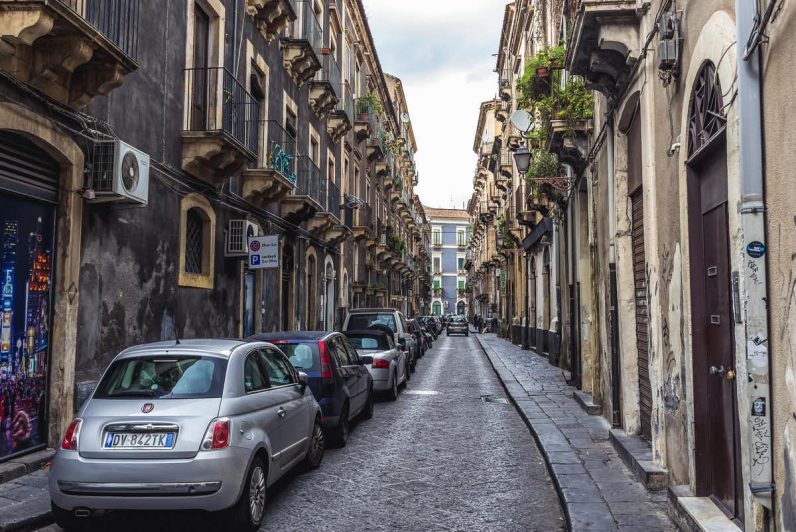
9. Automotive sharing
In all probability strangely, automobile sharing seems to be a reasonably divisive measure for decreasing automobile use in towns, in keeping with our research. Such schemes, the place participants can simply hire a close-by automobile for a couple of hours, have confirmed promising ends up in Bremen, Germany , and Genoa, Italy, with each and every shared automobile changing between 12 and 15 personal automobiles, on moderate. Their means incorporated expanding the choice of shared automobiles and stations, and integrating them with residential spaces, public delivery , and motorcycle infrastructure.
Each schemes additionally equipped automobile sharing for staff and ran awareness-raising campaigns. However different research level to a possibility that automobile sharing might, actually, induce up to now car-free citizens to extend their automobile use. We, due to this fact, counsel extra analysis into learn how to design automobile sharing methods that in point of fact cut back total automobile use.
10. College shuttle making plans
Two English towns, Brighton & Hove and Norwich, have used (and assessed) the carrot-only measure of college shuttle making plans: offering commute recommendation, making plans or even occasions for college kids and oldsters to inspire them to stroll, motorcycle, or carpool to college, together with offering stepped forward motorcycle infrastructure of their towns. Norwich discovered it used to be ready to scale back the proportion of vehicle use for college journeys via 10.9%, the usage of this means, whilst Brighton’s research discovered the have an effect on used to be about part that a lot.
11. Customized shuttle plans
Many towns have experimented with private shuttle research and plans for person citizens, together with Marseille in France, Munich in Germany, Maastricht within the Netherlands and San Sebastián in Spain. Those methods – offering adventure recommendation and making plans for town citizens to stroll, motorcycle or use (occasionally discounted) public delivery – are discovered to have accomplished modest-sounding discounts of 6-12%.
Alternatively, since they surround all citizens of a town, versus smaller populations of, say, commuters to college or the place of work, those approaches can nonetheless play a precious position in decreasing automobile use total. (San Sebastián offered each college and customized shuttle making plans in parallel, which is more likely to have decreased automobile use additional than both in isolation.)
12. Apps for sustainable mobility
Cell phone era has a rising position in methods to scale back automobile use. The Italian town of Bologna, for instance, advanced an app for folks and groups of workers from taking part firms to trace their mobility. Members competed to achieve issues for strolling, cycling and the usage of public delivery, with native companies providing those app customers rewards for attaining issues objectives.
There may be nice passion in such gamification of sustainable mobility – and in the beginning look, the information from the Bologna app appears putting. An outstanding 73% of customers reported the usage of their automobile “much less”.
However not like different research which measure the quantity or distance of vehicle journeys, it isn’t imaginable to calculate the aid of distance traveled or emissions from this information, so the entire effectiveness is unclear. For instance, skipping one brief automobile commute and skipping a 12 months of lengthy using commutes each rely as using “much less”.
Whilst mobility knowledge from apps can be offering precious equipment for stepped forward delivery making plans and products and services, just right design is had to make certain that “good” answers if truth be told lower emissions and advertise sustainable delivery, since the present proof is blended. As an example, a 2021 find out about discovered that when a ride-hailing carrier comparable to Uber or Lyft enters an city marketplace, automobile possession will increase – in particular in already car-dependent towns – and public delivery use declines in high-income spaces.
Towns want to re-imagine themselves
Lowering automobile dependency is not only a pleasant thought. It is very important for the survival of folks and puts around the globe, which the hot IPCC document on weather affects makes transparent hinges on how on the subject of 1.5°C the sector can restrict world warming. Heading off irreversible hurt and assembly their Paris Settlement tasks calls for industrialized countries comparable to the United Kingdom and Sweden to scale back their emissions via 10-12% in line with 12 months – about 1% each month.
But till the pandemic struck, delivery emissions in Europe had been often expanding. Certainly, present insurance policies are predicted to ship delivery emissions in 2040 which might be virtually unchanged from 50 years previous.
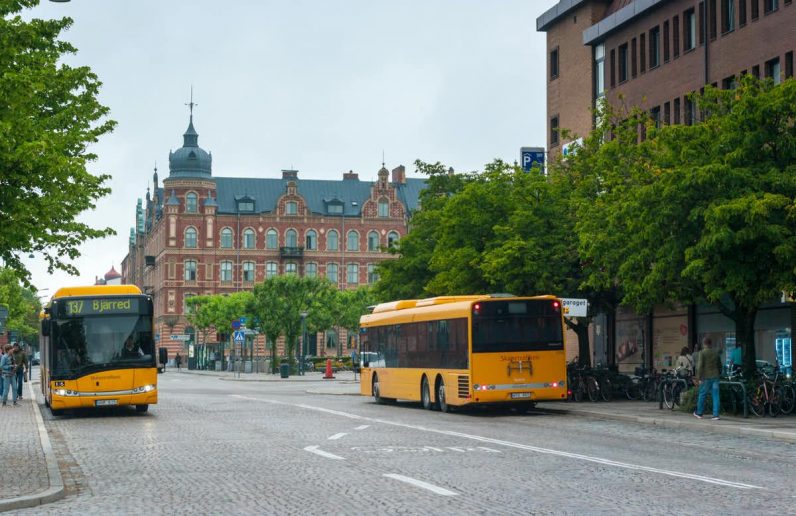
To fulfill the planet’s well being and weather objectives, town governments want to make the essential transitions for sustainable mobility via, first, heading off the desire for mobility (see Paris’s 15-minute town); 2nd, transferring last mobility wishes from automobiles to lively and public delivery anywhere imaginable; and in spite of everything, making improvements to the automobiles that stay to be zero-emission.
This transition will have to be speedy and truthful: town leaders and civil society want to have interaction voters to construct political legitimacy and momentum for those adjustments. With out fashionable public buy-in to scale back automobiles, the EU’s dedication to ship 100 climate-neutral towns in Europe via 2030 appears a far flung prospect.
Radically decreasing automobiles will make towns higher puts to reside – and it may be executed. A 2020 find out about demonstrated that we will be able to supply respectable residing requirements for the planet’s projected 10 billion folks the usage of 60% much less power than as of late. However to take action, rich nations want to construct thrice as a lot public delivery infrastructure as they these days possess, and each and every particular person must restrict their annual shuttle to between 5,000 kilometers (in dense towns) and 15,000 kilometers (in additional far flung spaces).
The certain have an effect on from decreasing automobiles in towns might be felt via all who reside and paintings in them, within the type of extra convivial areas. As a journalist visiting the newly car-free Belgian town of Ghent put it in 2020:
The air tastes higher … Folks flip their streets into sitting rooms and additional gardens.
Towns want to re-imagine themselves via remaking what’s imaginable to check what’s essential. On the middle of this, guided via higher proof of what works, they will have to do extra to become independent from from automobiles.
Kimberly Nicholas, Affiliate Professor of Sustainability Science, Lund College, republished from The Dialog beneath a Inventive Commons license. Learn the unique article.
[ad_2]
Fonte da Notícia



:strip_icc()/s01.video.glbimg.com/x720/10552536.jpg "Entenda por que seu WhatsApp pode ainda não ter as reações para mensagens | Tecnologia")